|
June 22, 2017
7:00 PM - 8:15 PM |
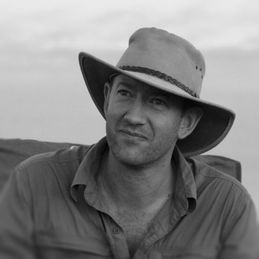
HOWITT LECTURE 2017
A joint lecture with the Royal Society of Victoria Talk by Assoc Professor Andy Tomkins (Monash University) METEORITES & COSMIC DUST: INSIGHTS TO THE EARLY SOLAR SYSTEM & EARTH Location: The Royal Society of Victoria, 8 La Trobe Street, Melbourne Time: 7.00pm - 8.15pm (AEST) Drinks from 6.15pm (AEST) Abstract The only place in the Solar System that mankind has visited, and brought back rock-sized chunks, is the Moon, at the cost of billions of dollars. Meteorites, on the other hand, have provided us with rocks from about 110 asteroids, as well as Mars and possibly even Mercury. And, tiny cosmic dust particles, which end up on Earth as micrometeorites, come from comets and debris left over from collisions between asteroids. Monash University geoscientists have been scouring the Nullarbor Plain for meteorites, recovering over 200 in the last 8 years. Because nearly all meteorites formed in the first 5 million years of our Solar System’s history, we can use them to investigate how the asteroids formed and evolved 4.56 billion years ago. We can use meteorites to investigate the ages of volcanic eruptions on Mars, and even glean clues into changes in Martian atmospheric chemistry over time. Micrometeorites are hundreds of times more abundant than meteorites, and can even be found on the roof of your house. They can consequently be found relatively easily in ancient sedimentary rocks, and we can use these fossil micrometeorites to investigate the chemistry of the early Earth’s upper atmosphere. In this talk, A/Prof. Tomkins will show how he and his students find meteorites on the Nullarbor Plain, and discuss how these and others from around the world are being used to study the asteroids and Mars. He will also present the results of some exciting break-through research on the world’s oldest fossil micrometeorites and what they mean for our understanding of Earth’s atmosphere 2.7 billion years ago. About the Speaker Associate Professor Andy Tomkins is a geoscientist who applies the principles of metamorphic petrology, structural geology and igneous petrology to his work to make unique contributions to the fields of economic geology, meteoritics and planetary science. He worked in the minerals industry for three years on finishing his undergraduate geology degree in Sydney before undertaking a PhD in economic geology with Dr John Mavrogenes at the Australian National University. Following a postdoctoral fellowship in Canada and a research fellowship at Monash University in Melbourne, Andy took on a continuing role at the Monash School of Earth, Atmosphere and Environment, teaching one of the largest economic geology classes in Australia, supervising his own PhD students and researching economic geology, meteorites and planetary science. |

|
The Victorian Division of the GSA respectfully acknowledges the Traditional Owners of this land, the people of the Kulin Nations. We pay our respect to their Elders, past and present. We uphold & acknowledge their continuing relationship to this land.
|